Jonas Becker · 10 November 2026
Fichteberg Communities Digitize Oral Histories from Longtime Residents to Preserve Vanishing Mountain Traditions
Communities across the Fichteberg region have initiated projects to record and digitize oral histories from longtime residents, focusing on mountain traditions that face pressure from changing demographics and environmental shifts. These efforts center on capturing accounts of forestry practices, seasonal festivals, and local resource management that residents have passed down through generations. Data from regional archives indicate that participation has grown steadily since the programs began in early 2025, with sessions scheduled through November 2026 to align with annual heritage documentation cycles.
Background on Fichteberg Mountain Traditions
Fichteberg spans several valleys where spruce forests and high meadows have supported specific customs tied to timber harvesting, herb gathering, and winter survival techniques. Historians note that many of these practices evolved in response to the area's steep terrain and variable climate patterns. Local records show that oral transmission remained the primary method until recent decades, when younger residents began relocating to urban centers and fewer elders remained to share stories directly.
One study from the University of Innsbruck tracked the decline in active storytelling groups between 2010 and 2024, revealing a 40 percent drop in documented sessions. Researchers attribute this partly to migration and partly to the loss of elders who held detailed knowledge of pre-mechanized logging and foraging routes. Communities responded by forming coalitions that coordinate recording equipment, transcription software, and secure digital storage.
The Digitization Initiative Takes Shape
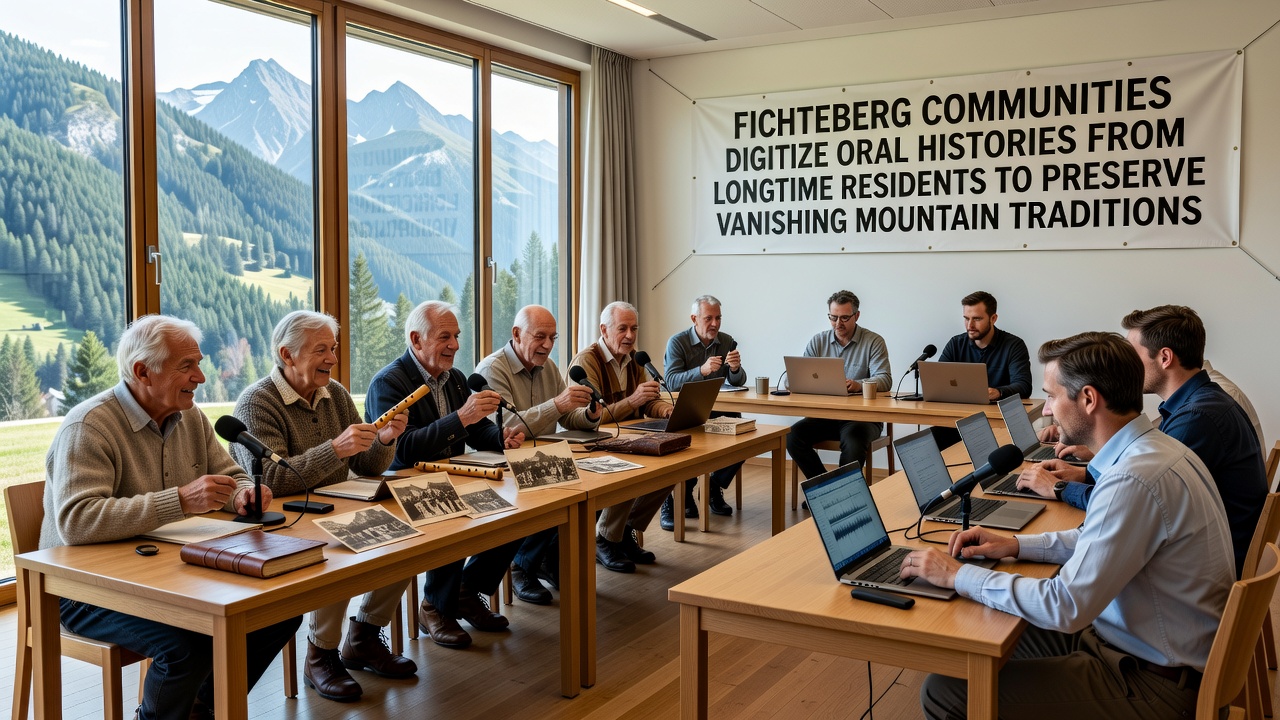
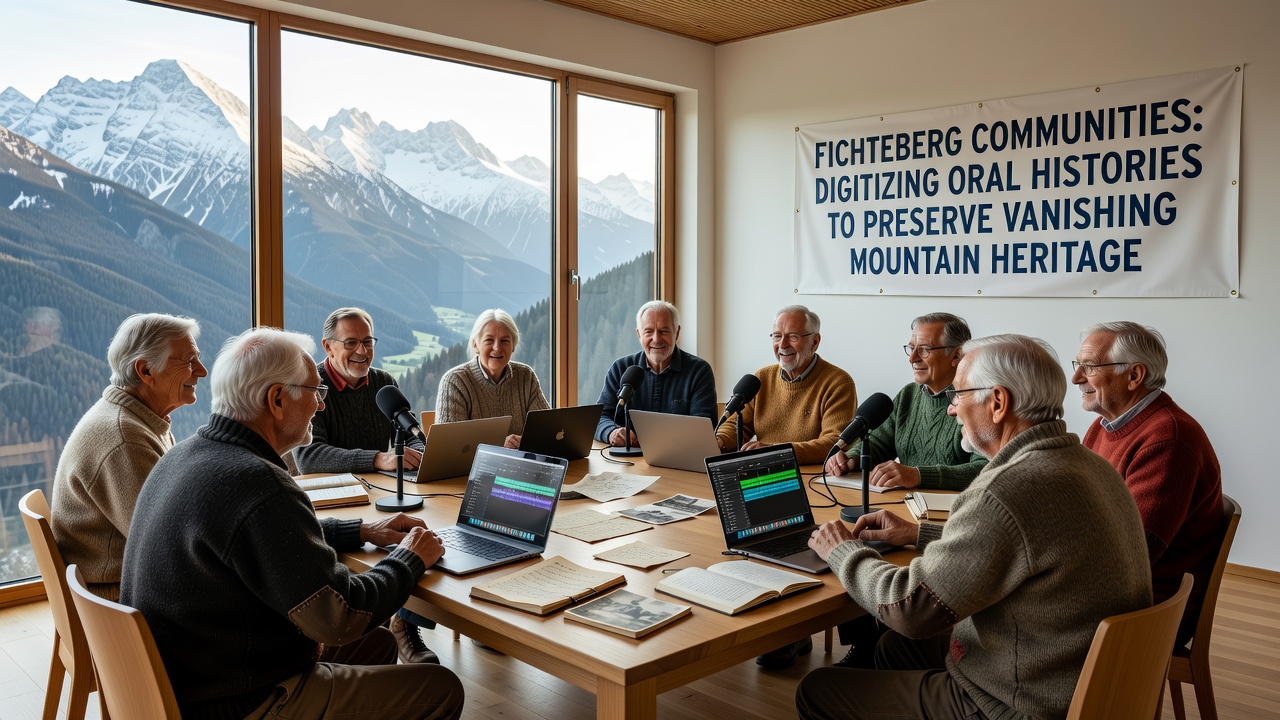
Project teams equipped community centers with portable audio recorders and tablets loaded with open-source annotation tools. Volunteers conduct interviews in residents' homes or at gathering spots such as old sawmills and chapel halls. Each session lasts between 45 and 90 minutes, covering topics from specific plant identification methods to the timing of traditional fire-lighting ceremonies. Transcripts undergo verification by at least two additional community members before upload to a centralized database hosted on regional servers.
By mid-2026, coordinators reported more than 180 completed interviews stored in searchable formats. Metadata tags include dates, locations, and keywords that allow users to cross-reference accounts of the same event from different narrators. The system also supports audio playback at variable speeds to assist listeners with regional dialects.
Stories Captured and Methods Employed
Accounts detail techniques for locating hidden springs during dry summers, methods for carving specialized hiking staffs, and recipes for preserving wild berries without modern refrigeration. Several narrators described the precise sequence of songs and dances performed during the autumn equinox gatherings that once marked the end of the harvest season. These details now exist as time-stamped files that researchers can analyze for linguistic patterns and geographic references.
Teams employ consent protocols developed in consultation with legal advisors to ensure narrators retain control over sensitive family information. Recordings receive encryption before storage, and access levels vary from public excerpts to restricted full versions available only to approved scholars. A parallel effort trains local students in basic audio editing so they can assist with noise reduction and chapter division.
Challenges and Ongoing Adjustments
Technical hurdles include inconsistent internet connectivity in higher elevations, which slows file uploads during peak collection periods. Coordinators addressed this by installing local servers that sync overnight with the main archive. Language variations across valleys require custom glossaries, and some dialects lack standard spelling conventions. Community linguists continue to expand these resources as new interviews arrive.
Funding comes from a combination of regional grants and private donations earmarked for cultural preservation. Budget reports released in October 2026 show that equipment costs accounted for 35 percent of expenditures, while transcription and verification labor represented the remainder. Partnerships with nearby technical colleges supply updated software licenses at reduced rates.
Impact on Preservation and Access
Schools in the Fichteberg valleys have begun integrating selected excerpts into history curricula, allowing students to hear direct voices describing events from the mid-20th century. Public listening stations at libraries provide headphones and simple search interfaces for visitors. Data from the archive platform indicate that external researchers from institutions in Germany, Austria, and Switzerland accessed more than 2,700 files during the first half of 2026 alone.
One collaborative project with the European Heritage Documentation Network links portions of the Fichteberg collection to similar oral history repositories in the Alps and Carpathians. This connection enables comparative studies of how mountain communities adapt shared traditions to local conditions. Observers note that the database structure supports future additions, including video segments and georeferenced maps that plot story locations.
Future Plans Through November 2026 and Beyond
Coordinators plan additional recording drives in remote hamlets before winter weather limits travel. November 2026 sessions will prioritize accounts of midwinter resource sharing customs that have seen reduced practice in recent years. Expansion discussions include mobile apps that let users contribute location-tagged memories while hiking traditional routes, though implementation remains in early planning stages.
Regular audits check file integrity and update backup protocols. Community feedback sessions scheduled for late 2026 will evaluate whether current metadata categories adequately capture emerging themes such as climate-related shifts in growing seasons.
Conclusion
The digitization of oral histories in Fichteberg continues to build a structured record of mountain traditions that previously existed only in spoken form. Through systematic recording, verification, and storage, communities create resources that support education, research, and local identity. Ongoing work through November 2026 and subsequent phases aims to maintain accessibility while respecting narrator preferences and technical constraints.